The farm - raising livestock

In those days, almost every farm had livestock. Livestock consumed the crops they raised on the farm and in turn provided things that society needed—meat, eggs, wool, etc. It was a source of income for the farm family, and kept everyone on the farm very busy doing chores.

On May, 1937 Mom and Dad bought 100 California lambs for $5.92 per 100 lbs. At times in the early 40’s, they had 500 lambs on feed. Lambs were purchased from out West, brought to the farm, sheared for their wool, and fed corn, hay and protein until they were marketed as fat lambs. This took 3-6 months.

They bought western lambs for 8-9 cents per lb, sold fat lambs for 9-10 cents per lbs, sold wool for 20-30 cents per lb—this was very important for our WWII soldiers—as wool is fireproof. Corn was 40-50 cents per bushel during this time.
Hogs were often called the “mortgage lifters” because if the farmer worked hard and raised hogs, he could often make a steady profit and pay off the mortgage on the farm. They raised and sold pigs every year from 1935 to 1967. In January, 1947, Dad was nominated for the Minnesota Swine Honor Roll. He went to a ceremony on January 16, 1947 at the University of Minnesota and received a medal.


Baby chicks were purchased every spring and put in a brooder house. There the chicks were kept warm under a gas brooder. When the weather warmed in the summer, the young chickens were moved to the “roosting shed” out in a field north of the farm place.

I have memories of going to the feed store in Alpha, Minnesota. The chicken feed was held in large cloth sacks sewn shut. Mom told me to pick out the feed sack I liked best. Usually the one I liked was on the bottom of the pile. I was partial to the color blue. The sacks of feed were loaded up, taken home, opened up and fed to the chickens. The empty cloth sacks were taken in the house and washed. Mom then cut up the cloth sacks and sewed it into a shirt. A new blue shirt!! Perfect!

The pullets (young female chickens) out in the field were growing fast. In early fall they began to lay a few eggs. Later on a dark autumn night, we drove the tractor and a caged wagon to the roosting house and caught all the chickens and hauled them to the chicken house. Here they would spend the rest of their life laying eggs. Most hens laid one egg per day.

The eggs were gathered daily and taken to the basement of the house where they were cleaned and packed in special egg cases (held 144 eggs each /12 dozen eggs) and taken to town and sold. Sometimes when Mom sold eggs, she got $30.00 a week. This was a lot of money in those days. Mom used the money to buy groceries and other things she needed. It gave Mom and other farm women a degree of independence that they needed.

Feeding cattle was also a part of the farm scene. Feeder cattle were bought from out West and brought to the farm to be fattened. Each fall, corn silage was made. A special machine chopped the entire corn plant, from there it was “blown” into an upright silo or horizontal bunker silo where in a nearly oxygen free environment the silage fermented. The finished product was a sweet smelling feed that the cattle really liked to eat. The cattle were fed corn silage, corn, and protein and would gain over two pounds per day. Sometimes the cattle were taken to Jackson and loaded on train cars and taken to Chicago to be marketed.
-Kent

Farm machinery, ‘The innovator and the steady hand’

When Dad and Mom began their married life on the farm, most all of the farm work was done by horses. In their early years of marriage, they began to purchase farm machinery and eventually a tractor. On February 14, 1945, the last team of horses sold for $29 apiece. It was an end of an era. Dad bought Mom a string of pearls for Valentine’s Day with some of the money from the horses!

Mom never questioned the fact that she married the right man. She often said he was more intelligent and interested in more ideas than the other young men she dated. But, it didn’t take long for her to realize she had married a true innovator. Her role soon became the “steady hand” in managing the farm.

The list of innovations on the farm is long. Some were successful, but others brought near disastrous results.

The Big Barn
This was a farm building built in the 50’s that had poles inside to support the building and a steel skin on the outside. Mom wanted a wood framed building that was solid like other farmers built. Today, about all farm buildingare built like the “Big Barn”.


The Texas Plow
All farmers in Jackson County used the moldboard plows in those days. Dad bought a “Texas Graham-Home” plow in the 50’s that was different because it had large steel teeth that tilled the soil. Today almost all farmers in the Corn Belt till their soil with a machine that is quite similar to the “Texas Plow”.

Fertilizer
In April, 1937 Dad put fertilizer attachments on his corn planter. He was among the first to use commercial fertilizer to grow better crops.

Planting corn using a tractor

Most of us have see the photo of Tom planting corn with horses, but in May, 1937 Dad was already planting corn using a tractor!

Aerometer Electric Pump
Water on farms had been pumped using wind power for many years. This process changed in November, 1939 when water was pumped using electricity on Tom and Esther’s farm.

Habco Corn Dryer

The spring and summer of 1951 was very wet and cool. This resulted in corn at harvest time that was too wet to store. Dad purchased a Habco corn dryer from Nebraska. This was one of the first corn dryers built. They used it to dry corn for themselves and for neighbors—who they charged for the cost of drying the corn.

Soybeans

Farmers in the Midwest grew corn, hay and oats. Some innovators like Dad started to raise the new crop from China –soybeans. In 1945 Dad and Mom sold soybeans for $2.05 /bushel. This was long before other farmers began to raise soybeans. Today soybeans are the second most important crop in the Midwest and ironically, China is the biggest buyer of soybeans in the world.

Herbicides

Dad, the innovator tried conservation tillage, narrow row soybeans, etc on his farm. This resulted in weeds multiplying very quickly and taking over the farm. With the farm teetering on the brink of disaster, crop herbicides were introduced. Herbicides were products that were sprayed on the soil that allowed the crop to grow but prevented the weed seeds from germinating and growing. In the last 50’s and early 60’s products such as Atrazine, Treflan, Amiben were introduced. Dad was an early adopter of these products and the farm was saved.

Corn Picker, Corn Sheller, Corn Combine

For year’s corn was harvested by hand. Dad and Mom were early adopters of the mechanical corn picker, the mechanical corn sheller, and the self propelled combine.

Melroe Bobcat
When Dad went to Gwinner, North Dakota to pick up this small, 3 wheeled self propelled machine used to clean livestock lots and help with other farm chores, and he had bought one of the first. Today, virtually every farm, construction company, governmental unit, etc. has one or more Melroe Bobcat machine or a similar kind of machine. Today they have 4-wheels or are articulating machines that help farmers complete their chores.


Roto Baler
This machine was purchased in February 1956 for $1,300.00. It made round bales—very unusual for the time since most all farmers made square bales. Today, most hay world-wide is baled into round bales.


The Constant Inventor

Early in his farming career, Dad took a welding class at the local high school. This opened up a whole new world to him. He came up with some very unique ideas to make things work around the farm. He almost always had a project going. He could often be found work on his latest project at the west end of the machine shed while the neighbors were already out in the fields. Like other inventors-innovators, he very much “marched to his own drum beat”. He hauled home pieces of steel, various items bought at farm sales, etc. He justified it by always saying it would be handy to have—“just in case”. Mom, the faithful wife generally stood by him, but did occasionally show some frustration. But through all the inventions and projects, they remained true to each other. -Kent

Education of the Ringkob Family

Mom had to convince her parents to let her attend high school because she would have to board in Jackson with another 13 year old girl until this girl’s parents finished the fall harvest and moved to town. Dad’s parents were convinced by a Jackson Ag instructor to let him go to high school instead of staying home to furnish labor for the farm. He was fortunate because he could board with his grandparents along with his 2 older brothers.
Growing up, our house had limited space for books. We had one small bookcase, in the farm house living room, which Mom still uses in her apartment over 75 years later. The children regularly brought home books from the country school library and collectively probably read most of the books in that library. Tommy remembers seeing our parents regularly read newspapers (St Paul Pioneer Press, Fairmont Sentinel, Jackson Pilot, Minneapolis Sunday and Drovers Journal) farm journals (St Paul Farmer & Farm Journal) and many other subscriptions (Saturday Evening Post, Readers Digest, National Geographic). Tommy remembers Mom reading to him and Kent in the north bedroom before going to bed.

Guiding Family Philosophies
Mom told us more than once that if you get a good education, it can never be taken away from you. She gave the example of how fast the Germans recovered after WW II and being able to build the best cars in the world.
Dad strongly felt we could learn as much by traveling as being in the classroom. The family made three long trips to see various parts of the U.S. Two of the trips were during January (California and Florida) and one during the summer to the Pacific Northwest and Canada.
Mom and Dad enjoyed reading and thought it was very important to being a good citizen. Good books and reading materials are precious. At the county school, the book collection was small and somewhat limited. To this day, Tommy has a real reluctance to write in, underline or deface a book in any way.
Tommy remembers a grade school spelling test where he just didn’t take the time to study. When he brought his report card home, there was a very low grade in spelling along with the rest of the very good grades. Mom asked “What happened?” and there was a tear coming down from her eye. Right then and there, he got the message that school was serious business.

District 93 Country School
Although we called it a one room country school, there were actually 7 separate rooms counting the basement. The main classroom occupied about ¾ of the east side with desks facing south toward a blackboard and a piano in the southeast corner. The wooden desks were in rows fastened to wooden runners. There was a small library on the southwest corner and going north a girl’s cloakroom, a middle entry way and a boy’s cloakroom with a water dispenser which had to be filled with a bucket of water from the outside well hand pump. There was an enclosed porch on the west side which served as the first entry way. It was an open porch in its earlier days. The basement had the coal burning furnace and was rather dirty because of dumping coal there. When the school converted to oil heat, it was much cleaner but still an oily smell down there. The basement was painted white and we were able to play a form (low ceiling) of basketball during really cold weather. It would not have been a country school without boys and girls pit toilets which meant a long run outdoors through a cold Minnesota blizzard in the winter. There were no trees on the acre school yard to break the wind with the exception of one scrubby one for a little shade in the southeast corner.


Most of the grades had 2 or 3 students; however, occasionally there was only one as when Tommy started first grade and Kent had 4 in his grade. The teacher would rotate among grades giving and checking assignments, answering questions, giving quizzes and tests, and keeping order. There was a lot of energy in that one room when you had between 15 and 25 farm kids in different grades. One incident comes to mind where hyper Jimmy, who could try any teacher’s patience, was acting up and she hit him on the back of the head which caused it to hit the table and a tooth was chipped.
One of the key decisions made by the District 93 school board was to hire Mrs. Ben (Velma) Vickmark who was considered one of the best grade school teachers in Jackson County. Mrs. Vickmark had a profound influence on Tommy, Kent, Kathy and Marita in their educational achievements.
Mrs. Vickmark and her students (1951)

Christmas Program
A Christmas program in 1930 was very important and memorable because that is when Mom and Dad met for the first time.
One of the big events of the school year was the Christmas program where the school children would practice skits and perform an evening program for the parents and community just before a two week school vacation. By selling advertising panels on the face of the curtain, the school was able to acquire a curtain which could be rolled up and down by ropes.
Tommy had one unforgettable Christmas skit where the plot line was that his pants need to be shortened. In the skit there were at least two females in the family that each wacked off a lot of the pant legs. Tommy was supposed to pull up his regular pants far enough and put the altered pair over the top. The dressing room was the library so he didn’t think he could take off his regular pants. He could just barely pull up his regular pants far enough so they wouldn’t show under the altered pants which were about as long as Bermuda shorts. This skinny little kid jumping on the stage demanding to know which family seamstress cut his pants so short brought down the house.
Dad had certain duties as a member of the school board. Among these tasks was tipping up and putting the outhouses back on the pits after Halloween shenanigans. Somebody also had to pump the well at the beginning of the school year to get all the old possibly contaminated water so that fresh, safe water would flow into the well. One year after lifting off the pump and platform, a mouse could be seen floating on the water surface. The answer was to dip out the mouse and pump longer. It took a long time for his sons to pump until they got plenty of fresh water flushed through the system with that old hand pump.

Jackson High School
Sometime during the 1950s, a decision was made to start sending the eighth graders to join town kids to get them ready for freshmen year. Both eighth and freshmen grades were part of junior high in the old south building (the original high school building Mom and Dad attended). It was a wonderful time to go to high school with prosperity of the recovery from WWII, the start and blossoming of rock and roll, first generation of teenagers to drive and own fairly recent vintage cars and watching TV (but through a snow storm due to poor reception).
Tommy JHS Graduation (1958)

College
Most of the family has no idea why Mom’s children and grandchildren earned seven degrees from Iowa State University and ten if you count the in-laws. I never remember my parents specifically talking to me about college. In high school, I took math and chemistry which was recommended if you were interested in college. However, indirectly Mom had a very important role in deciding where I went to college. Mom, at the supper table, said that she had seen an ad in the St. Paul Farmer listing Hampshire ewes for sale by Reuben Kietzer. Reuben would sell purebred registered ewes for $45 when they reached five years old. Since I had started to show market lambs at the Jackson County Fair and wasn’t winning, this seemed like a chance to raise some class winners. The ewes were bred to an Iowa State College Hampshire ram from which we got a ewe class winner, Black Beauty. We went to the Minnesota Bred Ewe sale, the Cornbelt Classic in Des Moines, IA and other purebred sales to buy more Hampshires. We also went to the Iowa State College campus in Ames Iowa to buy a Hampshire ram, Icey. That trip got me interested in Iowa State College. I was accepted by both the University of Minnesota and Iowa State College. I decided to go to Iowa State because I wouldn’t have to commute across the Twin Cities to the main campus. Also, Minnesota assigned you a number and said get used to being just one of 8000 new freshmen which was almost the student body size at Iowa State.
It is a real tribute to those hardy Scandinavian and German pioneers who started District 93 in the 1890s and could only afford to pay a teacher for 2 or 3 months. The dedicated teachers such as our grandmother, Mary Rawle, Mom and Mrs. Vickmark were part of the heritage that allowed all 4 kids to earn college degrees in 4 years and one an Ivy League Ph.D.
We are also grateful to Mom and Dad who taught us the importance of education. All 4 of us graduated from college with no debt due to scholarships and money we earned from 4-H livestock projects plus summer jobs on and off the farm. -Tommy


District 93
First building was erected in 1893 at a cost of $450 - addition to building in 1899.
Early years 7 or 8 month terms - sometimes less New law - 1947 - require 9 month school for state aid purposes
1894-1895 - Mary Rawle (second teacher at Dist. 93) Early 1930's - Esther Hansen
Teacher taught all 8 grades - must do own janitor work
Tommy
1st grade - 1946 - Mrs. Betlach
2nd grade - Mrs. Betlach
3rd grade - Mrs. Don Doll
4-7 grade - Mrs. Vickmark
8th grade –Jackson-graduated from JHS in 1958
ISU-1962, U of Missouri-MS-1964 Cornell U.-PhD-1968
Kent
1st grade - 1948 - Mrs. Don Doll
Gr. 2-7 - Mrs. Vickmark
8th grade - Jackson - graduated from JHS in 1960
ISU - 1964
Kathy
Kindergarten - April 1951
1 - 4 grades - Mrs. Vickmark
5-7 grades - Mrs. Betlach
8th grade - Jackson - graduated from JHS in 1963
St. Olaf College - 1967
Marita
Kindergarten - April 1955 - Mrs. Vickmark
1-5 grades - Mrs. Betlach
6th grade - Mrs. Mellum
7th grade - Jackson - graduated in 1967
ISU - 1971


Esther Hansen’s 1930-31 pupils, her first year teaching at Dist. 93 school. The year when Tom and Esther met at the school Christmas program.

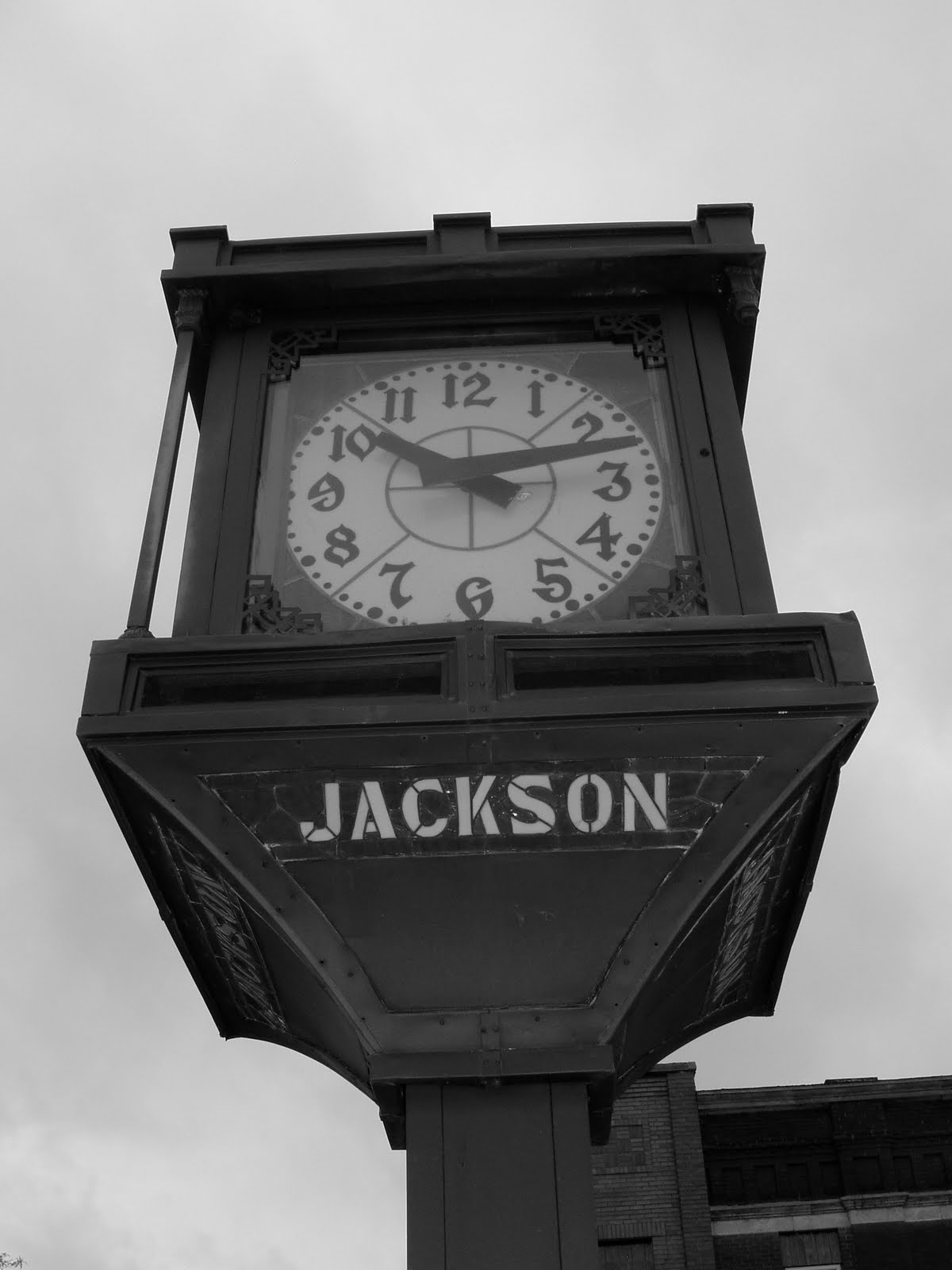
Our home town - Jackson, Minnesota


Jackson is a pretty town nestled in the Des Moines River valley amidst the flat prairies covered with farms in southwestern Minnesota.
Our farm was located 8 miles northeast of Jackson. There were 2 good ways to town and each was about half gravel and half pavement. The gravel roads were muddy in the spring, dusty in the summer (no air conditioning in cars) and covered with snowdrifts in the winter months.
Esther knew these roads well. She was often taking her children to piano lessons, band lessons, bible school, confirmation, dentist or medical appointments, etc. and of course to shop.
These are some of my memories of some of the places we went to shop in our home town of Jackson.

Fairway Grocery Store
 
This grocery store only had 2 aisles. After picking up supplies in the first aisle and rounding the corner past the meat counter, you were on your way to the check-out counter. With open sacks of onions and other fresh produce, the smells in this store were wonderful. Two people who worked at Fairway were Freddie the “Fruit Man” and Bad Egg Johnson.

Penney’s
 
We often went here to get clothing. After deciding on our purchases, the clerk would write up a slip, Esther would give her $10.00, and the clerk would put the slip and the $10.00 bill in a round brass container and attached it to a trolley system. A series of small overhead cables connected all corners of the store to a central cash register. After attaching this small brass container to the overhead trolley system, she pulled a rope that activated some spring system and the slip and money went whizzing along the cable to the head bookkeeper/cashier. The head cashier would review the slip, check for errors and then make correct change (if needed) and send the same container back to the proper corner of the store. Then the original clerk would give any change back to the customer if needed, along with the sales slip. Us kids all loved to watch this wonderful trolley system of brass containers/sales slips and money move overhead on our visits to the Penney’s store.


Ben Franklin Store 
 
This was a 5 and 10 cent store. Yes, you could buy something for 5 cents. It was here we got our crayons and school supplies. In December, we spend a lot of time in the toy department dreaming of the toy we hoped Santa Clause would bring us for Christmas.
 Legend has it that Sam Walton had heard of 2 successful Ben Franklin stores in Jackson and Pipestone and decided to travel to visit these stores. It was in Jackson that he observed the success of having the cash register by the exit to the store and decided to arrange his stores the same way. In those days, most stores had their cash registers in the middle of the store.
 
Davies Clothing Store
It sold women’s clothing and it is where Esther got her good clothing items.

Coca-Cola the beverage
This was originally gotten at the soda fountain at the drug stores. Later, dispensing machines contained the glass bottled beverages and could be found at gas stations and implement stores. A bottle of Coca-Cola cost 5 cents and we kids (on special occasions) got to put a nickel in the machine and pull out our bottle of the tasty beverage. Coca-Cola in those days had a lot more kick than the watered down stuff we drink now. You could take a swallow and it tingled on your tongue, plus it made your eyes water a bit too. 


Dr. Peterson, Dentist
 The dentist’s office was located above the State Bank; it was a long 30 steps up to his office. With the smells of the dental office drifting down the hallway, this was never a good place to have to visit.

Gasoline Alley
Larry Ringkob (nephew of Tom and Esther) often talked about how many gas stations Jackson had in the 50’s. Highway 16, a major route to the Black Hills and Yellowstone National Park ran right through Jackson, MN. I remember when gas prices increased from 25 cent/gallon to 29 cents /gallon!! People were very upset. How was anyone supposed to be able to afford gas for 29 cents /gallon??


Haircuts

Tommy and Kent got their haircuts in Alpha, MN—a village located 6 miles east of Jackson. Esther would pay 50 cents for our haircuts and the barber would give each of us a nickel change which we immediately took next door to Dorske’s CafĂ© where we bought ourselves an ice cream cone.
-Kent

‘On the road again” - Memories of family travels


Our Dad loved to travel. But it was Mom who held the whole operation together. Dad would propose a trip and Mom would plan it with the help of their AAA membership. Dad usually drove the family car ( a Ford) with Mom in the front passenger seat and little sister Marita riding in the middle with her head on Mom’s lap. Marita slept a lot on our trips. When she was awake, she sat on a homemade car seat (no seat belts then) made from a wooden peach crate. Inside of the “car seat” was storage room for maps,etc.

Mom liked to drive too and often relieved Dad at the wheel. Mom was a careful driver, while Dad liked to drive fast, take sharp corners, and stop fast! He said we were all safe though because he had “good reflexes”.

Mom would have a a cooler by her feet with food for picnic dinners at noon and cooking supplies for breakfasts and suppers fixed in motels. Also she would have the camera bag that contained a snapshot camera, a slide camera, and a movie camera along with extra film. She would write in a small notebook to keep track of expenses along with a daily record of activities. Our trips were well documented by Mom.

In the back seat Tommy sat by the left window, Kent by the right window, and Kathy in the middle. These three siblings did not sleep much as the miles went by. Most of the time they were watching the changing landscape. But sometimes they played games found in a book Kent had received as a present. One of the favorite games consisted of spotting various sights as we traveled such as a black sheep, etc. We would get points based on what we saw. In hot weather we would often have some of the windows open in the car (no air conditioners). It made for noisy and windy traveling, but better then the heat. The little triangular vent windows on the side fronts were very convenient.

Storage was carefully organized in the family sedan. Up front was the glove compartment, Marita’s car seat, and Mom’s cooler and bags. Behind the back seat was a window well with a ledge for storing books, etc. For one of our trips Dad decided we needed more storage. So he designed a storage shelf above our heads in the car with an opening across the front over the back of the front seats. It was made of a brown masonite board held in place with two metal fence posts stuck into the upholstery over the side windows. It looked rather strange, but worked well. The exception was when Dad made one of his fast stops. Stuff would come sliding across the shelf and the rest of us would try to keep it from falling down on the people in the front seat. Also we would need to keep the items from falling off the ledge behind the back seat. We all got pretty good at doing this.

In the 1950’s most people on the road stayed in motels, hotels, or tourist cabins. We would stay in motels or tourist cabins with kitchenettes so Mom could cook breakfast and supper. As evening approached, we would look for AAA advertised motels with a neon sign stating “vacancy”. Some evenings we would see a lot of “no vacancy” signs before finding a possibility. Mom and Dad would go in to inquire about price and check the condition of the room before agreeing to take it for the night. While they were doing that, the four kids had to wait in the car. In nice weather Kent and Tom would have the back side windows rolled down. They would crawl out the windows and sit in the empty window frame with their legs inside and the tops of their bodies outside. They would be facing each other over the roof of the car and throw a ball back and forth. Kathy and Marita would have to patiently wait in the car.

We usually stayed in a room with two double beds, or a double bed and a rollaway. Mom, Dad, Kent and Tom got the beds while Kathy and Marita slept in sleeping bags on the floor hauled in from the trunk of the car. On some trips we also brought along an old army cot. Kathy and Marita would sleep on that with their heads at opposite ends and a firm reminder from Mom to “keep their legs to one side and not kick their sister.”
Many of the motel rooms had television sets in the 1950”s. But you had to pay an extra 25-50 cents to get a special cord from the motel office so one could use the television. I don’t remember our family ever paying the extra money to watch one. We were on a tight budget.

Gas stations were an important part of our travels. Dad always bought gas at Standard Oil (now BP) stations. All gas stations had attendants (often high school boys) who pumped the gas, washed the windshields, and checked the oil under the hood. In hot weather they might also be adding water to the radiator. Stations would have big signs advertising that they had clean restrooms. There were no convenience stores inside, but an office (often messy and dirty) where you paid. The office might also have a radio or television too. There would also be well equipped service bays inside a attached garage to work on your car if necessary. We often stopped at stations to check on road conditions and to get directions to local addresses.

Short Trips in the Midwest
Some of our earliest trips were day trips or weekend trips in Minnesota, Iowa and Wisconsin. We did day trips (usually on Sunday) to the Twin Cities for special events. The Ice Follies in Minneapolis with professional skaters was a favorite. Usually we had seats up high in the convention center. But one time Dad surprised us. As we walked out of the concourses into the seats, we were all ready to start walking up to the top. But Dad started down toward the front by the ice rink as the rest of us watched in amazement. He had splurged and it was so exciting to be so close to the show on ice.

We had a couple favorite restaurants in downtown Minneapolis. One was the Forum
Cafeteria on South 7th Street. We kids had a tough time limiting our choices as we walked through line. It all looked so tempting. Another favorite was the Nanking Chinese Restaurant with their beautiful lanterns hanging along the walls. Mom would order hot tea and ask the waitress not to bring green tea. (When Kathy was in college, she worked one summer at a Jewish Country Club in the Twin Cities. There she learned that it was a nice Jewish couple who owned that Chinese Restaurant.)

One of our favorite spots in Minneapolis was the Cinerama Movie Theatre with the wide screen where we watched the feature “The Seven Wonders of the World.” A year later we came back to see “Search for Paradise.”

We also liked to attend the Minnesota State Fair at the end of August. We saw square dancing tractors and ate miniature donuts from the automatic donut machine. The state fair was enormous stretching over many acres with numerous exhibits, vendors, and big crowds of people. In later years we spent much time there exhibiting in 4-H and staying in the dorm on the 3rd floor of the big white 4-H building. One year Brother Tom stayed at the state fair the whole 10 days exhibiting sheep in open class and FFA.

A family trip that we did nearly every year was a weekend trip to Baraboo, Wisconsin, to visit Dad’s brother Severn Rinkob and his family. We would drive on old US highway 16 across southern Minnesota to LaCrosse, Wisconsin, to cross the wide Mississippi River and then continue southeast to Baraboo. Severn, Catherine, and their 3 daughters lived in a 1920‘s Tudor style house close to downtown. When we got there we would all shake hands (no hugs back then), talk loudly about how happy everyone was to see each other, and “my, how the children have grown.” Catherine would cook wonderful (gourmet to this farm kid) meals. She had a cupboard in her kitchen with a door to the outside. She would set pies to cool in this cupboard. Originally that had been where the milkman used to leave milk for the family. Catherine, who was an excellent seamstress, would show us her latest sewing project. In later years she made many quilts.
Kathy, Kris, Aunt Catherine, & Marita (1953)

Severn would show us his big garden in the back yard. Then he would take us on drives in the area to see the high school where he was principal and point out local geological features. We would take hikes around Devil’s Lake. One time when we were hiking in the woods a guard suddenly appeared. Turned out we were getting too close to a U.S. munitions factory.

1952-1953 Family Trip to California
Most of our family’s longer trips were taken in the 1950’s after Marita was no longer a baby and before Tom left for college in 1958. December 1952 we left on a trip to California and Texas. We were gone over Christmas vacation and New Year’s so the kids didn’t miss too much school.
As we were traveling across Nebraska, Wyoming, Utah and Nevada by car, we stopped at a gas station to fill it up. Dad, Tom and Kent went in to pay while Mom, Kathy and Marita waited in the car. When the guys came back out, they told us they had seen a television playing in the office of the station! The rest of us were envious. Finally when we got to California, we stayed with some old friends of Mom and Dad’s near San Francisco and they had a television. So the rest of us finally got to see this great new invention!


On our way to California we visited Salt Lake City. Our family would visit the capitol buildings in each state and Mom would buy a china state plate. We toured the Mormon tabernacle where the choir performed. The guide demonstrated the excellent acoustics and told us the building was held together with wooden pegs instead of nails. But the fondest memory of SLC was the salt water taffy we bought and ate as treats on the rest of our trip.

The California we visited did not have Disneyland, but was very agricultural with lots of citrus groves, vineyards, and vast fields of produce. Near San Francisco we went to an old time amusement park and rode the roller coaster. We walked around a park by the Golden Gate bridge and saw a cross section of the giant cable that holds up the bridge. We marveled at the double decker Bay bridge as we drove across it. Everyone ordered fish at Fisherman’s Wharf except Kathy who had a hamburger and Marita who ate half a canned peach with a scoop of cottage cheese for most meals.

Christmas Day was spent driving through the Giant Redwood Forest (Sequoia National Park and Kings Canyon). There was lots of snow at the higher elevations. We could only find one restaurant open for noon dinner and they were serving cold turkey sandwiches. It was a very different (but still nice) Christmas for four Minnesota farm kids who were used to spending Christmas with lots of cousins and grandparents.


New Year’s Day we attended the Rose Bowl Parade. We were staying with one of Mom’s cousins in Burbank and had to get up very early to get a place to stand throughout the parade. We were right by the curb and had a wonderful view. It was an exciting experience watching the horses with beautiful silver ornamentation on the saddles and harnesses, the marching bands, and the floats covered with flowers. The Grand marshall of the parade was newly elected Vice President Richard Nixon with his wife and two young daughters. Afterwards while walking back to the car through the crowds of people, Kathy had several of the charms lost off her bracelet from brushing against so many people.

We stopped in both Reno and Las Vegas on that trip. We liked the name “Reno” and later named our new farm dog “Rene” after the city. Both cities were exciting to see with their big casinos, hotels, and flashy signs.

While in southern California we drove across the border into Tijuana, Mexico. We walked through the dusty open air markets and bought some souvenirs. Mom and the girls bought blue felted jackets with embroidery.

On the way to Texas we saw the Grand Canyon with its incredible views and colors. The drive across Arizona and New Mexico seemed to go on forever. I remember riding under the moonlight across the desert.

In Texas we visit our Rawle relatives who were related to my Grandma Ringkob (Mary Rawle) of English ancestry. The relatives lived on farms near Decatur with milk cows and pecan orchards. Their houses were old and very poorly insulated against the cool January weather. But the relatives were very hospitable and we had a fun time. We played a game in which you had to guess the number of pecans someone was holding in their hands. In he morning for breakfast they served us tall glasses of iced tea and fried potatoes. We had never seen iced tea! And fried potatoes were a supper food in Minnesota. It was cultural shock! In later years we heard that some of these relatives struck oil on their farms.

Our family with the Flatgaards (1954)

We also visited Mom’s old high school friends Jeffrey and Auslaug Flatgaard in Dallas. Jeffrey was a pilot with Braniff and they lived in a nice brick house on Prestonshire Lane. They had four children about the same age as the four of us so we had a great time. Dad got to ride with Jeffrey in the cockpit on a late night flight to Houston. And I attended a “big city” grade school first grade class with their daughter Ruth. She and I became pen pals after that and we are still exchanging Christmas greetings nearly 60 years later.

Texas was part of the old segregated south in the 1950’s. I remember seeing so many black people in the rural areas sitting on their front porches with their legs dangling off the edge. Also there were the separate fountains marked “colored” and “white.” One time I headed to a “colored” fountain and Mom pulled me back. She explained to me why I couldn’t get a drink of water there. It seemed strange but we followed the rules.

After leaving Texas we headed north to Minnesota. It took two full days of driving on two lane highways to reach home. It was always good to be home again and we children would comment on how much better our water tasted at home from our well! The first thing we would do when we got out of the car when we got home was to yell and yell for our dog. We would be thrilled to see our pet dog again and she would be excited to see us too.

-Kathy
Family trip to Florida (1953)

Enterprise Earners 4-H Club


4-H club work started in rural Iowa and eventually spread throughout the world. Its creation was begun by some educators who believed that learning could be more effective if young people could “learn by doing” as compared to learning from a book.


4-H made its way to Jackson County in the late 40’s. Neither Esther nor Tom was in 4-H club work when they were young. Esther had helped Hazel Hauge as a 4-H leader of the Alpha 4-H Progressive Club. Esther’s brothers, Art and Gordon, were members of this 4-H club.
Tommy was taking piano lessons from a neighbor girl, Madge Olson. She was an energetic young girl and was the founder of the Enterprise Earners 4-H club.


Tommy was the first to join followed by Kent. Monthly meetings were held in the old Enterprise Town Hall. Their leader was Mrs. Anderson, a very talented person. Kathy and Marita joined the year that they were turning 10 years of age.
Tommy and Kent’s first project was chickens. When Esther got her baby chickens they were mostly pullets—future egg layers—but also included some free baby roosters. Mom and Dad gave Tommy and Kent each five roosters to show at the County Fair.
At the monthly 4-H meeting at the Enterprise Town Hall, 4-Hers were to give demonstrations. This is where the 4-Her became the teacher and the rest of the 4-Hers and parents were the learners/observers.

It was at the November meeting when Tommy (age 11) with his trusty assistant, Kent (age 9) decided to give a demonstration on “Debeaking Chickens”. Debeaking - is where you trim the top beak of the chicken’s mouth and was done to keep the chickens from picking on each other. This was done with a small electric devise that had a red hot button on it. You caught the chicken, held it tightly, put your finger in the chicken’s mouth to hold its tongue back, and briefly held the top beak on the red hot button. This was no more painful then trimming your fingernail. Tommy and Kent took a couple of chickens to the 4-H meeting in a burlap bag with a twine to tie it shut. With the flapping of the wings, the squawking of the chickens, the smell of the burning beaks---let’s just say we had the undivided attention of everyone in the town hall that evening!

Our next 4-H project was pigs. This really wasn’t very interesting. This was followed by the beef steer project. This was a project where a 75 pound kid was expected to have complete control of a 1,000 pound plus animal or risk being criticized by many adults for not doing a very good job on your project.


After lots of work training our 4-H beef steers at the farm, it was time to take them to the county fair. Ray Dorschner, a neighbor, stopped by with his big livestock “semi” and hauled our steers along with others in the neighborhood to the Jackson County fairgrounds. While unloading the animals, Mark Dorschner’s steer bolted and was running around the county fairgrounds loose. We chased it but couldn’t catch it. But, we were in luck, as the rodeo was at the fairgrounds and was going to perform that day. We walked over and asked the rodeo cowboys if they could help. “Sure”, they said. They couldn’t catch the beef steer either. Eventually the steer got tired and was caught and lead back to the 4-H beef barn.


It was sheep that eventually became the main 4-H project for the Ringkob family. We began with some western ewes that gave us some lambs that weren’t very good. Kent remembers showing lambs at the county fair outdoors. The judge had a group of blue ribbon lambs, a group of red ribbon lambs, and a group of white ribbon lambs, and after that a gap—and Kent and his lamb!! (Not good)

With much improved breeding (Hampshire sheep) and a lot of hard work, our family did much better. We had several champions at the county fair, a grand champion for the State of Minnesota, and a first place showing in a class at the International Livestock Show in Chicago.

Esther was always supportive of all the kids’ 4-H projects. She also helped out by serving lunch at the monthly 4-H meetings, working at the food stand at the county fair, and by hosting project meetings at their home, etc.
Enterprise Club tour (1958)

Other important elements of 4-H were the club tours where we visited all the members homes and saw their 4-H projects. 4-H softball was very important too. The annual 4-H Play Day attracted hundreds of kids and their families by having many kinds of games for the 4-H youth to participate in.


When we were in 4-H the county extension staff consisted of Ray Palmby, Bob Leary, and Audrey Tolzmann. Our family knew these people well and they were very influential in our lives. When Kathy and Marita became more active in 4-H, Esther stepped up her level of involvement. She hosted food project meetings in her home. She was also helped her daughters with their sewing projects.
-Kent

4-H Pledge
I pledge my head to clear thinking
My heart to greater loyalty
My hands to larger service
And my health to better living
For my home, my club, my community, my country and my world.


Mom sewing x-stitched aprons for Kent’s host families in Finland
IFYE from East Pakistan, spent time on our farm in summer 1958


Outfits sewn for 4-H dress review (1964)
Marita & Kathy 4-H talent show
Club booth at county fair
Marita’s 4-H demonstration at the state fair (1962)


The Gang

Freel & Neva Ringkob, Roy & Ethel Bute, 
Otto & Lillie Holt, Esther & Tom Ringkob, 
Nedra & Swede Weseman, Hazel & Nels Hauge (1958)
A group of friends that got together regularly was called “The Gang”. These six families also celebrated wedding anniversaries and birthdays. The “Gang” or part of the “Gang” got together regularly from 1936 to 1970.

The women helped with graduation celebrations, bridal showers and weddings for each other’s children.

I have fond memories of getting together with the “Gang”. Even though there were no other children my age, I always enjoyed it. I can still vividly picture in my mind the inside of each of the homes of the “Gang” members. The men and women would have a full evening of visiting and sometimes a game plus a meal (picnic during the summer months). All six women in the “Gang” were wonderful cooks!

Mom also belonged to the Alpha Friendship Club. This was a women’s group that met once a month in the afternoon. They took turns hosting the get-together at their homes. The name comes from a small town close to our farm - Alpha, MN - most of the women lived in the Alpha, Jackson or Sherburn area. Mom began attending this group in 1944 and they continued getting together for over 40 years. I frequently went with Mom when I was young and they always made me feel welcome. When I think back on it, I guess I was the youngest in my family and most of the other women in this group had older children - so I was a “tag-along” and got lots of adult social experiences at a young age! The hostess would usually get out some puzzles, books or games for me to play with while the women visited but allowed me to be “all grown-up” as a pre-schooler and let me eat the afternoon lunch (fancy sandwiches, dessert) on the nice china or glass dessert sets. -Marita
!-- Start post reversal code -->